|
1. What Are Advance Tech Orthotics? They are custom fit
accomodative arch support, inserts for footwear. Designed to help correct an abnormal foot, not to fit the abnormality.
2. How Do Custom Fit Orthotics Work? Fit specifically to each foot the orthotic helps balance the foot supporting
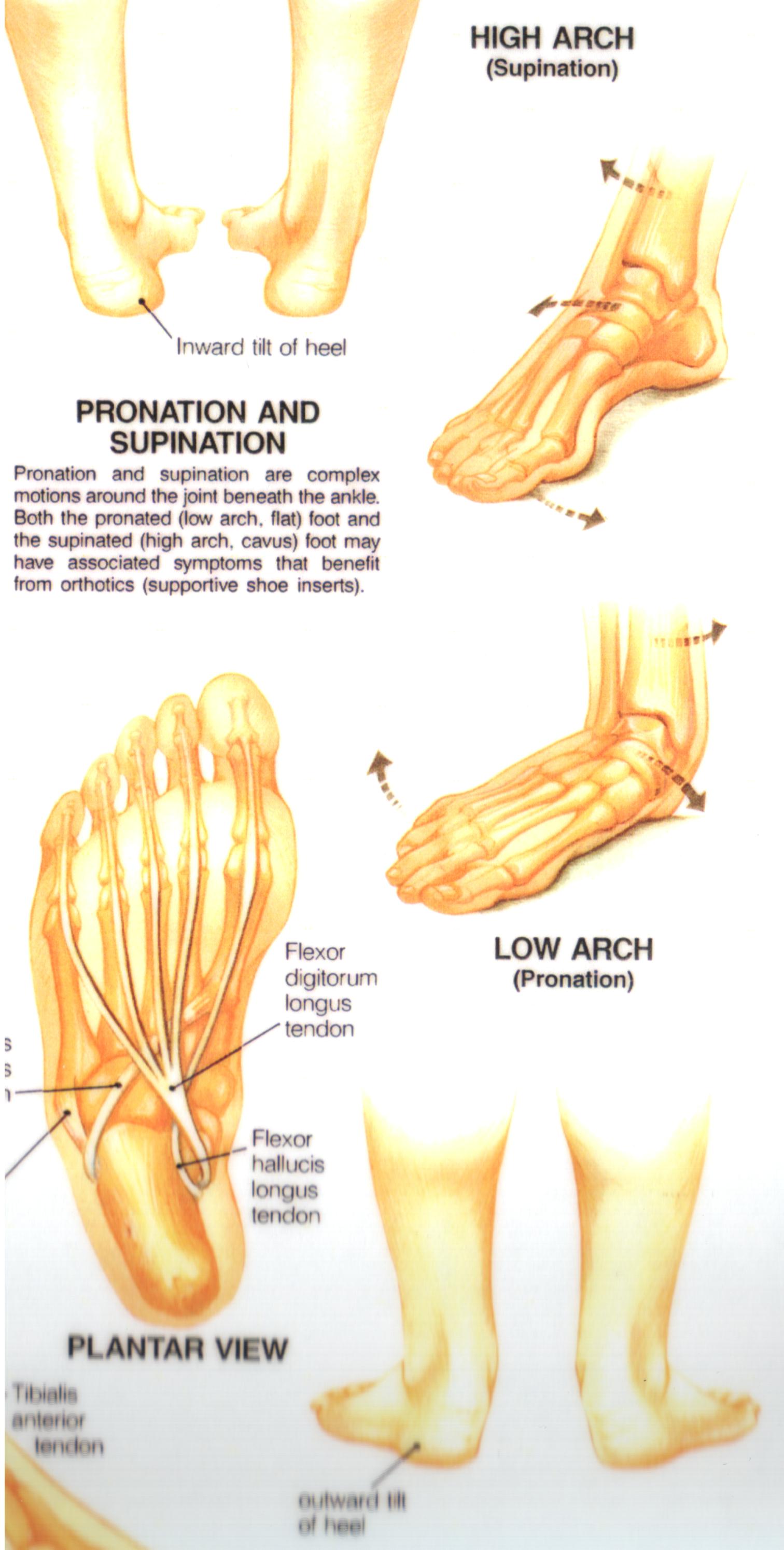
or relieving weight and pressure where necessary, at the same time aligning to foot to help prevent lateral motions called
excessive supination or pronation. Maintaining a healthy, well-balanced foot will help relieve pain and fatigue throughout
the entire body.
3. Who Are They For? Everyone! It does not matter how young or how old you are. What type of
work you do or what activities you enjoy. If you have pain, discomfort or fatigue and would enjoy relief, orthotics are for
you!
4. Will They Fit In All My Shoes? Advance Tech orthotics have been called the professional dancers
choice, as they are easily adaptable to all shoes. Once custom fit, one pair are transferable between slip-ons, oxfords, boots,
high-heels, and athletic shoes without needing larger fitting footwear to accommodate the orthotic.
Made from a special
material our orthotic is washable, easy to keep clean and is odor free. There is no bacterial buildup to cause skin and toenail
infections commonly seen with other orthotics and can be comfortably worn either between the sock and shoe as well as next
to the skin between the sock (or panty hose) and foot.
6. Does Insurance Pay For Orthotics? Check your health
insurance plan. If you have coverage for custom fit orthotics then your insurance should cover ours. Upon request at time
of order your receipt includes procedure and I.D. codes to submit for reimbursement. We cannot provide diagnostic codes for
your insurance company as we do not diagnose. Check your coverage if a referal or diagnosis is required before submitting
a claim
7. How Do I Get My Orthotics? Go to the pricing and ordering page or call for a casting box. Also go to
our Events page and see when someone may be in your area for a live fit or call our lab for an appointment.

8. Why Do My Feet Hurt? "Oh, my feet hurt!" How many times have we said that to ourselves? Probably all too
often. Well, take heart-- your not alone. Foot pain is one of the most common complaints among people regardless of sex, hereditary
background, or occupation. Everybody who stands all day, walks on hard floors, or wears stylish shoes knows the agony of "de
feet". Originally man had sandy beaches and grassy plains to walk on. today individuals walk on hard surfaces, are more
sedentary, and have posture influenced by bad backs, bad shoes and big stomachs. The unabsorbed shock of these hard surfaces
drains energy, stresses our joints, causes blood and fluids to pool in legs, and results in tired, sore, aching, and swollen
feet. If your foot is becoming flattened as you walk you might be causing a mechanical and/or a muscular imbalance
in your feet. the imbalances are most destructive during gait (walking) because it is then that the effects of abnormal shock
absorbing ability of the foot translates into what is essentially a deforming force. Ultimately the imbalances
may cause such problems as back, hip, knee and ankle difficulties, postural problems, corns, calluses, bunions, hammer toes,
nerve aggravation (neuromas), arch and heel pains and problems. As a general rule, the more severe and obvious the imbalance,
the earlier the symptoms and greater are the problems that result. HEEL AND ARCH PAIN can be due to a spur an the
bottom of the heel and/or an inflammation of the ligaments and muscles that attach to the heel on the bottom of the foot.
This is called plantar fascitis and frequently accompany a heel spur. this is usually caused by overuse or improper mechanics
of the foot. ~Tight muscle like ligaments on the bottom of the foot (Planter Fascia) that pull on the heel when
you walk causing inflammation on the bottom of the foot and the heel. ~A spur (a bony projection) from the heel that
causes inflammation, bursitis, and pinching of nerves. A bony spur, however, may or may not cause pain and can be caused by
excessive heel rotation (pronation or supination) or excessive pounding, longitudinal arch weakness, stretched plantar muscles,
or arthritis. ~Congestion (fluid) within the heel bone itself. This is thought to be associated with fluid retention
in the body, recurrent trauma to the heel or a weakening of the actual bone. ~Most commonly heel pain is brought on
when the arch becomes over stretched and flattened as the stability of the foot is lost during walking. This is caused as
the muscle like soft tissues on the bottom of the feet pull on the heel. Heel pain also occurs when too much stress is put
on the heel bone, when the heel is bruised during walking or jumping on hard surfaces, or when poorly constructed footwear
is worn. BUNION DEFORMITY A bunion is a swollen joint and calcium deposits where the big toe meets the rest
of the foot. Sometimes the big toe is bent towards the other toes and this puts certain stresses on the joint upon walking
and wearing shoes. The pain of a bunion is usually due to an inflamed bursa or soft tissues overlying this joint, or inflammation
in the joint. NEUROMA Very often there is an inflamed or pinched nerve that causes sharp pain, burning, numbness,
or an electric shock sensation in the bottom of the foot, on the ball of the foot or into the toes. It develops when the nerve
between two metatarsal heads is pinched, bruised and inflamed. The trauma and discomfort are brought on by tight shoes, walking
in a flattened manner, or receiving repeated impacts or jolts to the forefoot. ACHILLES TENDINITIS Achilles
tendinitis is very common injury and is an inflammation of the sheath surrounding the Achilles tendon which produces pain
behind the heel, ankle, and lower calf when you walk or run. It is caused by stretching the tendon suddenly or repeatedly
when you're not used to it. SHIN SPLINTS Shin splints is an inflammation of the tendons or muscles in the
front or inside of the lower leg. It is caused by the same kind of overuse that leads to achilles tendinitis. The affected
area is painful when you walk or run, and could be worse when you go uphill or stairs.
|
 |
|